Does Ulcerative Colitis Qualify for Disability Benefits? How to Apply for Benefits

Atticus is a law firm and Certified B Corp offering free, high-quality advice to Americans who can't work due to disability. Our experienced disability lawyers bring 50+ combined years of experience and help 100,000+ apply for benefits each year.
If your ulcerative colitis is so severe that it limits your ability to work, it can qualify you for monthly disability and healthcare payments through the Social Security Administration (SSA). In 2024, the Social Security Administration awarded disability benefits to 115,933 workers with digestive disorders such as ulcerative colitis.
To help you qualify, we’ll explain how the SSA evaluates medical conditions like ulcerative colitis, when it qualifies for a disability, and how you can get benefits for ulcerative colitis.
Key Takeaways
You can qualify for disability benefits if your symptoms of ulcerative colitis are severe enough to prevent you from working and meet Social Security Administration (SSA) criteria.
To get approved, you must provide medical records showing ongoing, severe symptoms, such as repeated hospitalizations, significant weight loss, anemia, or other complications despite treatment.
You can apply for SSDI or SSI benefits, and your chances of approval improve if you have consistent medical care and strong documentation from a specialist.
Is ulcerative colitis a disability?
Yes, the Social Security Administration may consider ulcerative colitis a disability if your symptoms are severe enough to prevent you from working and meet specific medical criteria.
If you’re still able to work and earn above the SSA’s limit, your condition may not qualify for disability benefits. However, you may still be protected under the Americans with Disabilities Act (ADA), which prohibits discrimination and provides workplace accommodations.
How the SSA defines ulcerative colitis
Ulcerative colitis is a kind of inflammatory bowel disease (IBD) — like Crohn’s Disease — though it specifically affects the colon (large intestine) and rectum. Common symptoms for ulcerative colitis include diarrhea (possibly mixed with blood), loss of bowel control, an urgency to defecate, rectal bleeding, abdominal cramping and pain, involuntary weight loss, and secondary conditions such as anemia or malnutrition.
4 common types of ulcerative colitis
There are four common types of ulcerative colitis. Though several of them share symptoms, they all impact different areas within the colon and rectum. These include:
Ulcerative proctitis
Proctosigmoiditis
Left-sided colitis
Pancolitis
Can you get disability for ulcerative colitis?
If you have ulcerative colitis and your symptoms make it impossible for you to work, it is possible to qualify for Social Security disability. You’re more likely if you’re already seeing a gastroenterologist and your symptoms persist despite treatment.
Before you can receive benefits payments, you’ll have to show the SSA that your ulcerative colitis meets their strict criteria. You can also increase your odds of approval by working with a disability lawyer.
Criteria for getting disability with ulcerative colitis
Ulcerative colitis can be painful and debilitating, but unfortunately, experiencing symptoms and flare-ups isn’t enough to qualify for Social Security disability benefits. You’ll have to prove the severity and ongoing nature of your symptoms by meeting one or both of the following two criteria:
1. Your ulcerative colitis may qualify for disability if you have experienced the following and it’s documented by endoscopy, biopsy, medical imaging, or an operation:
You’ve had an obstruction of the small intestine or colon AND
You needed hospitalization for intestinal decompression or for surgery AND
This has happened at least twice, with each occurring at least 60 days apart and within a consecutive six-month period.
OR
2. You’ve experienced at least two of the following in a consecutive six-month period despite continuing to receive treatment:
Anemia
Low serum albumin (hypoalbuminemia)
Clinically-documented abdominal mass, causing pain or cramping that doesn’t respond to your prescribed medication
Perineal disease with a draining abscess or fistula
Involuntary weight loss of at least 10% of your baseline weight
Need for supplemental nutrition
Your ulcerative colitis is likely extreme enough to be classified as a disability by the SSA if you experience any or all of the above symptoms.
4 questions to ask yourself before applying
Have you been hospitalized more than once because of blockages in your intestines or colon?
Have you lost weight very quickly?
Do you struggle to control your bowels?
Have you missed work or taken many breaks because you needed to use the bathroom or were in pain?
My ulcerative colitis meets the criteria. Now what?
If your ulcerative colitis meets the SSA’s criteria, you can apply as soon as you’re ready and you have all the required documentation in hand. You can still apply if you’re unsure whether your colitis will qualify, but it is time-consuming, and it may only be worth it if your odds of approval are good. Consider the following before beginning a disability claim:
Apply now if
You’ve been diagnosed with colitis AND
Your symptoms make it impossible to work AND
You are seeing a gastroenterologist or other specialist AND
Your doctor thinks your condition will not improve for at least a year
Consider waiting and applying later if
You’ve been diagnosed with colitis, but your doctor is hopeful that you will get it under control within a year OR
You haven’t yet stopped working (even if you worry you’ll need to soon)
Probably don't apply if
Your colitis isn’t stopping you from working (even if it’s difficult to live with) OR
You're working (earning more than about $1,690 per month) and don't plan to stop
You can also take our 2-minute disability quiz to determine whether or not you qualify before you start your application. If you do qualify, we can connect you with a disability lawyer who can help increase your odds of approval. (You won’t have to pay your lawyer until you get approved for disability benefits.)
Which type of benefits should you apply for?
Proving the seriousness of your colitis is important, but so is applying for the right program for your situation. The SSA offers two types of benefits:
Social Security Disability Insurance (SSDI) typically supports people who’ve worked at least five of the last ten years.
Supplemental Security Income (SSI) is for people who don’t have much work history and have little to no monthly income.
It’s also possible to apply for SSDI and SSI at the same time. Both programs use the same application, so you can try for both, and the SSA will check whether you qualify for one or both.
How much is a disability check for ulcerative colitis?
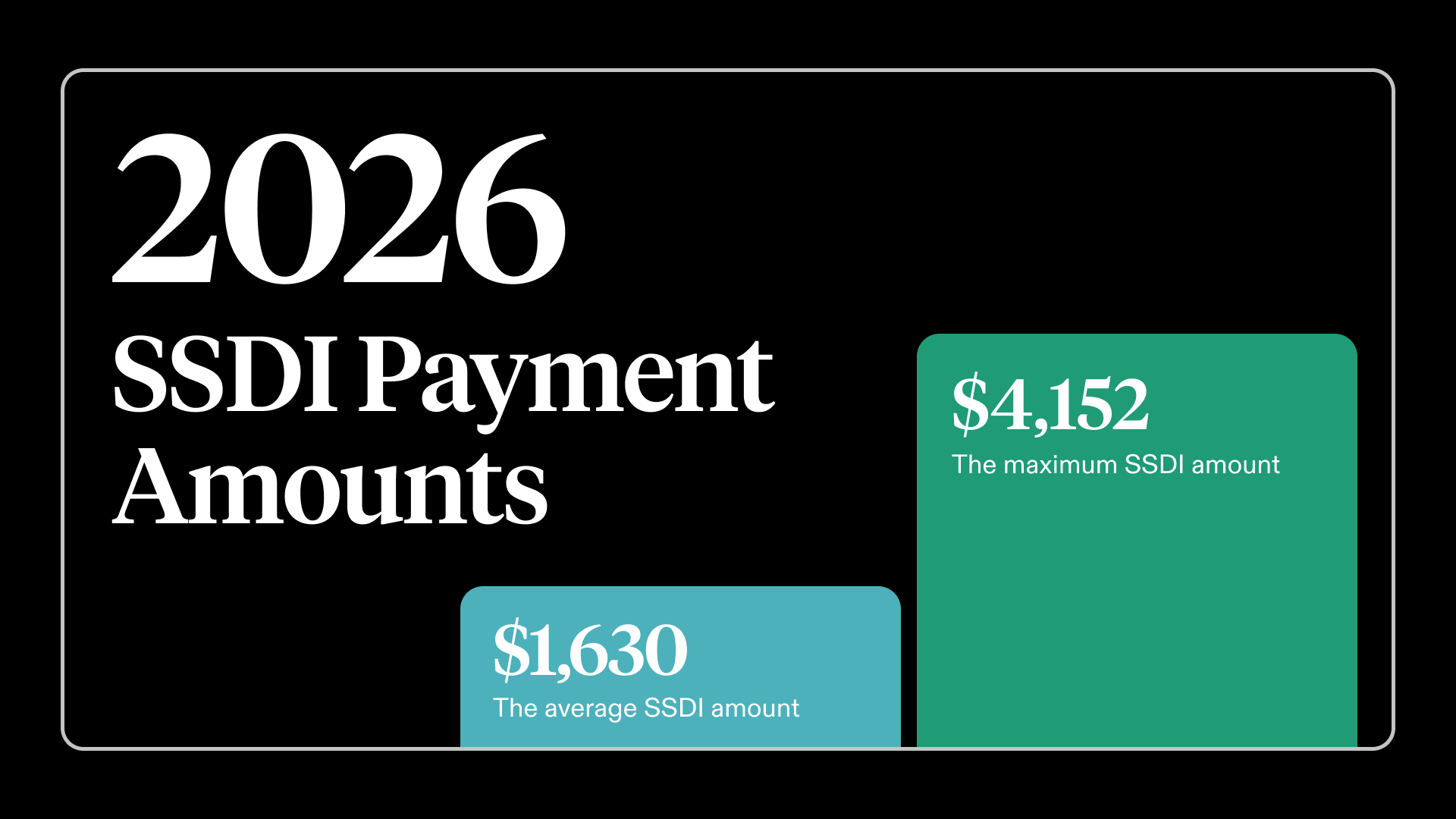
In 2026, the average disability check for people with ulcerative colitis and other digestive diseases is $1,657.
Your actual monthly payment depends on your unique situation. In particular, the amount of your disability benefit check depends on your work and income history. Regardless of how severe your ulcerative colitis is, the maximum monthly SSDI benefit is $4,152, while the maximum SSI payment is $994 in 2026.
What if my ulcerative colitis doesn’t meet the criteria?
You can still apply even if your ulcerative colitis doesn’t meet all the criteria. It may still be worth applying if you believe that you can prove that your condition limits your ability to work.
Even if you do meet all the criteria and your symptoms are advanced, qualifying for disability can be challenging. But don’t give up even if you get denied the first time. Only 20% of people who apply for disability benefits win their claim on the first try. If you get denied, you’ll have an opportunity to appeal in front of a judge, and your chances of approval go up — nearly half of applicants get approved at this stage.
For more help, try our step-by-step guide to applying for disability benefits.
Find disability help in your state
Related resources:
Qualifying for Disability: Everything You Should Know

Is it Hard to Get Disability for Mental Illness? (Yes, But This Can Help)

What Conditions Qualify FAQ
What conditions automatically qualify you for disability?
Compassionate allowance cases or TERI cases qualify you for disability. You’ll still have to meet work history or income and asset requirements — more on those here. We’ve listed all the compassionate allowance conditions for 2024 here.
What medical conditions qualify for disability?
What heart conditions qualify for disability?
Many common cardiovascular and heart conditions that qualify for disability benefits, including: Aneurysms (especially if you experience consistent chest pain), Congestive heart failure (especially if you’ve had to be hospitalized due to episodes), Coronary artery disease, and Postural orthostatic tachycardia syndrome (POTS).
What back conditions qualify for disability?
Many back conditions qualify for disability — in particular those that limit your ability to easily walk, sit, stand, or lift items. If you have back pain or limited mobility when performing basic physical tasks, you’re likely a good candidate for benefits. In fact, 30.1% of disability recipients receive benefits for orthopedic or musculoskeletal disorders.
Jackie Jakab
Lead Attorney
For Clients
For press inquiries, please email press@atticus.com.
Fields of Law
For Lawyers
At the bottom of many websites, you'll find a small disclaimer: "We are not a law firm and are not qualified to give legal advice." If you see this, run the other way. These people can't help you: they're prohibited by law from giving meaningful advice, recommending specific lawyers, or even telling you whether you need a lawyer at all.
There’s no disclaimer here: Atticus is a law firm, and we are qualified to give legal advice. We can answer your most pressing questions, make clear recommendations, and search far and wide to find the right lawyer for you.
Two important things to note: If we give you legal advice, it will be through a lawyer on our staff communicating with you directly. (Don't make important decisions about your case based solely on this or any other website.) And if we take you on as a client, it will be through a document you sign. (No attorney-client relationship arises from using this site or calling us.)
- © 2026 Atticus Law, P.C.
Terms | Privacy | California Privacy | CHD Policy | Disclaimer | This website is lawyer advertising.